
Designing for other people always felt easy. I actually loved it. There’s something satisfying about taking someone else’s vision and turning it into something they’re excited to share. When I was working on client branding, everything flowed. I knew the process, trusted my decisions, and delivered with confidence.
But when it came time to design for myself, everything felt different. What should have been fun became frustrating. I would sit down, full of ideas, and end up closing Canva without saving anything. I’d scroll Pinterest for inspiration, toggle between ten different fonts, and test out colors that all started to blur together. I didn’t feel creative. I felt stuck.
And if you’ve ever had that experience, you know exactly what I’m talking about. Knowing how to do something for others, but feeling completely unsure of doing it for yourself, you’re not alone.
It Wasn’t About My Skill Level
At first, I thought maybe I was just being picky or unmotivated. But the more I looked at it, the more I realized it wasn’t about skill. I knew how to design. I had the experience. What I didn’t have was direction.
When I work with clients, there’s always some structure. There’s a brand story, an ideal audience, and a clear end goal. That structure makes decision-making easier. But when I was working on my own brand, I had too much freedom. No one to give feedback. No guidelines. No brief. And definitely no deadline.
What I was feeling was classic decision fatigue. Every little choice — font, color, layout — felt heavy. And the more I tried to force it, the more confused I felt. I wanted my brand to look perfect, but I didn’t even know what “perfect” looked like for me.
Eventually, I started noticing patterns. I wasn’t stuck because I lacked creativity. I was stuck because I had no framework to guide my ideas. I’d second-guess every decision, start over constantly, and spend hours working on something I never used.
If any of this sounds familiar, here are some signs you might be dealing with the same thing:
- You open Canva and immediately feel overwhelmed by the blank page
- You find yourself starting over again and again without ever finishing anything
- You feel like your brand never looks as good as others, even when you know what you’re doing
- You spend more time comparing than creating
This wasn’t about being unprepared or inexperienced. It was about needing a clearer path forward.
What Finally Helped Me Move Forward
Everything changed when I decided to treat myself like a client. I stopped chasing more inspiration and started creating systems. I knew what worked in client projects, so I adapted those same tools for myself.
First, I chose fonts that actually felt like me. Not the trendy ones everyone else was using. Not the ones I saw on Pinterest or in popular templates. I picked fonts that felt aligned with how I wanted to show up. Whether that was friendly and modern or clean and classic, I gave myself permission to follow what felt right.
Then, I created a one-page brand board. Nothing fancy. Just something visual I could come back to whenever I felt uncertain. It included my colors, fonts, logo variations, and a few notes about the style and tone I wanted to maintain. That brand board became my creative anchor.
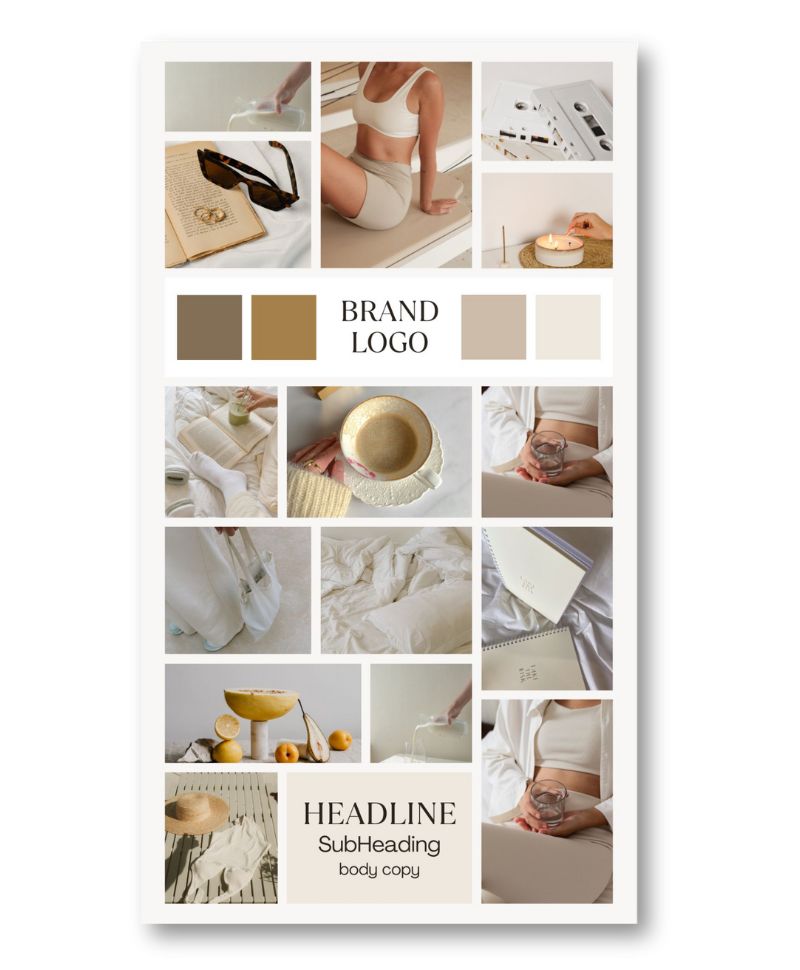
I also set up a few reusable templates in Canva. Things like Instagram graphics, email headers, and product mockups. Instead of starting every design from scratch, I used these templates as a starting point. This alone saved me so much time and helped my content feel more consistent.
Most importantly, I gave myself permission to stop chasing perfection. I reminded myself that my brand didn’t have to be flawless to be effective. The real win was in showing up. Creating something real. Putting it out there.
Here are the exact steps I followed to simplify my process:
- Define 2 to 3 fonts that reflect my brand tone
- Choose a primary color palette and one or two accent shades
- Create a visual brand board with my core design elements
- Build 3 to 5 go-to Canva templates for regular content
- Start creating from a place of clarity instead of overthinking
Once I had a system, everything felt lighter. I stopped second-guessing myself and started designing with confidence again.
If You’re Struggling With Your Own Brand Design, I See You
If you’ve ever felt stuck when trying to design your own brand, please know that you’re not the only one. It’s one of the hardest parts of running a business, especially for creatives, educators, and service providers. It’s not that you don’t have taste or talent. It’s that designing for yourself requires a different kind of clarity.
When your own brand feels messy or unfinished, it’s easy to lose confidence. You might feel frustrated that your client’s work looks better than your own. You might start avoiding social media because nothing feels quite right. And you might even question if you’re cut out for this at all.
But none of that is true.
What you need is not more ideas. You need a simple way to organize and apply the ideas you already have. That’s exactly why I started building a toolkit. Something to help you get started, stay consistent, and feel confident in your visual brand.
I’ll be sharing all the details with you very soon. Inside, you’ll find done-for-you Canva templates, curated font pairings that actually work, and ready-to-use brand boards that give you a clear direction. You won’t have to figure everything out from scratch. You’ll have a place to start and the tools to make it feel like yours.
Here’s a sneak peek of what’s coming in the toolkit:
- Canva templates for content that looks polished but still personal
- Font combinations that help your voice shine through
- Plug-and-play brand boards so you don’t have to overthink every design
- A step-by-step mini guide to help you set up your visuals with ease
This is for people who want their brand to look like them, not a copy of someone else. It’s for people who are ready to feel proud of their presence online, without spending hours trying to make it happen.
You’ll hear from me again soon with everything you need to know.
But for now, I just want to remind you of something important.
You’re not behind. You’re not doing it wrong. You’re just in the messy middle, and that is completely okay.
You’re learning what works for you, and that’s the most valuable thing you can do.
You’ve got this.
Related Posts:
- How to Upload Fonts to Canva + Video Tutorials: (Pro, Mobile & Fixes for Every Issue)
- Canva Licensing Explained: A Complete Guide to Free, Pro, and Enterprise Use
- My Top 3 Canva Font Pairings This Month (With Free Templates!)
- How I Finally Nailed My Brand Design (Without Overthinking Everything)
- 5 Common Font Pairing Mistakes (and What to Do Instead)
- 3 Canva Time-Saving Tips You’ll Wish You Knew Sooner
Leave a Reply